
Choosing the right soldering iron tips is crucial for the success and ease of your soldering projects. The correct tip can significantly impact the precision and quality of your work, ensuring that the task is completed to the highest standard. This guide will explore the essential considerations when selecting soldering iron tips, the various types available, and key factors to keep in mind to streamline your soldering experience.
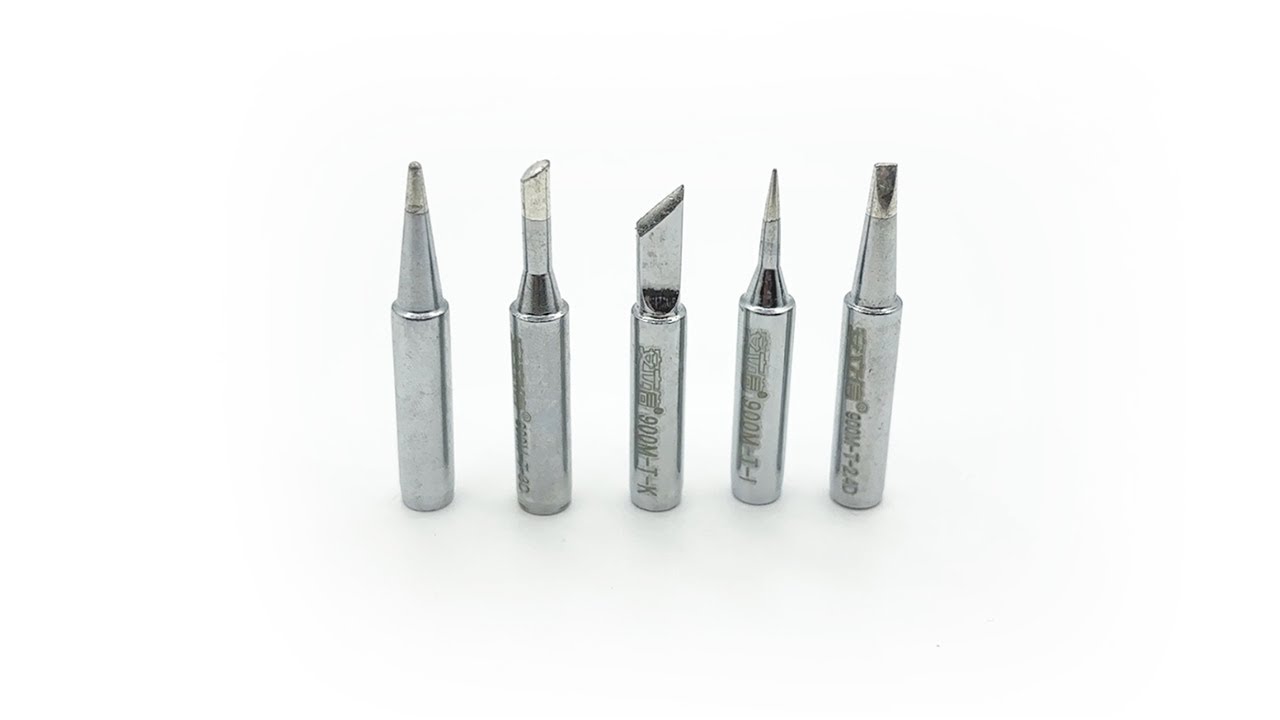
How to select soldering iron tips?
Choosing the appropriate soldering iron tip is crucial for successful soldering. Factors to consider include the tip’s shape, size, and thermal properties, which should be tailored to the task. Chisel tips are versatile, hoof tips are ideal for precise applications, and knife tips are best for multi-lead situations. Blade tips and conical tips are also available for specific scenarios. For optimal heat transfer, it is vital to use a tip with a broad contact area that matches the thermal capacity of the components and board.
Tip Shape and Size
- Chisel Tips: Versatile choice for a wide range of soldering tasks, helpful in spreading heat uniformly through part leads and pads.
- Hoof Tips: Useful for soldering small gauge wire and applications where the solder needs to be applied to a larger area.
- Knife Tips: Ideal for multi-lead applications and reaching slotted cavities, suitable for fixing solder bridges.
- Blade Tips: This can be helpful for specific applications and time-saving in certain scenarios.
- Conical Tips: Useful for various works by using different areas of the tip surface1.
Tip Thermal Properties
- Look for the broadest tip possible to enable the most significant contact area to transfer the heat best.
- Consider the thermal capacity of the circuit board and the electronic components when selecting the tip.
General Tips
- Ensure that the tip is the correct size for the job, as a tip that is too small or too big can affect the heat transfer.
- Choose a tip that works with your soldering station and is compatible with your iron or station.
Types of soldering iron tips
There are several types of soldering iron tips, each with their benefits for specific applications:
- Chisel Tips: These are the most popular tip shapes and are helpful for a wide range of soldering tasks. The wide edge of chisel tips helps them to spread heat uniformly through part leads and pads.
- Hoof Tips: These are very useful for soldering small gauge wire and other applications where the solder needs to be directed in a specific manner.
- Knife Tips: These have an edge shape that allows them to reach slotted cavities that other tip designs can’t get. They’re ideal for multi-lead applications and J-leaded components like PLCCs and DRAMs.
- Conical Tips: These have a pointed cone-like shape and are helpful for various works using different tip surface areas.
Are all soldering iron tips the same?
No, all soldering iron tips are not the same. They come in various shapes, sizes, and materials, each designed for specific applications and tasks. Smaller tip sizes are suitable for precision soldering, while larger ones are ideal for soldering more significant components or surface areas.
Most modern soldering tips are made of a copper core plated with iron. The iron prevents the copper from oxidizing and corroding, while the additional plating layer used for soldering presents a surface that wets well with the solder. Some tips are made of copper-silver alloy, which reportedly has a longer lifespan.
What are the factors to consider when selecting a soldering iron?
When selecting a soldering iron for electronics, there are several factors to consider:
- Power Output: The power output of a soldering iron is measured in watts. It is a significant characteristic as it heats the tip rapidly and maintains a consistent temperature. Most models provide between 20 and 60 watts of power, with reliable models offering a power output of 40 to 50.
- Temperature Control: An excellent soldering iron should have temperature control. This feature allows you to set and maintain temperatures suitable for your work. Some models even have an LED status indicator to tell when the tool has reached the desired temperature.
- Type of Iron: There are different types of soldering irons, including soldering pencils, soldering guns, soldering stations, and rework/repair stations. The kind you choose should align with the work you intend to do.
- Tip Type and Size: The soldering iron tip is crucial as it directly contacts your soldering components. There are various tip shapes, including chisel, knife, angle, and needle tips, each with benefits and specific applications. The tip’s size is also essential; a tip that is too large might cause the solder to flow undesirably, while a tip that is too small might not reach all the points you want.
- Comfort and Ergonomics: The soldering iron should have a comfortable grip and feel easy to hold, similar to an oversized pen. For electronics, a slim, needle-like tip is beneficial for precise work.
- Price: The cost of the soldering iron is also a factor. While a cheap soldering iron may not perform well, spending much money on one of these tools is unnecessary. Most users can get outstanding results from irons that are priced in the mid-range.
- Brand and Availability of Replacement Tips: Choosing a brand with readily available replacement tips is advisable. This ensures that you can easily replace the tip when it wears out or when you need a different type of tip for a specific task.
- Additional Features: Some models offer tips, temperature readouts, and durable construction. These features can enhance the usability and longevity of the soldering iron.
Remember, the best soldering iron depends on your specific needs and the type of soldering job you plan to do.
In conclusion
Choosing the suitable soldering iron and tips is crucial for efficient and successful soldering. Knowing the various types of tips and the specifics of the soldering iron empowers you to make informed decisions based on your specific soldering needs. Understanding the different types of tips and the particulars of the soldering iron empowers you to make informed decisions based on your specific soldering needs. To invest in a soldering iron that meets your current and future needs, consider power output, temperature control, ergonomics, and brand reputation. Always match the tip to the job, prioritize comfort and control, and choose a soldering iron that offers the necessary flexibility and reliability for your soldering machine.


